
A two-location barre schedule needs one clear view of classes, instructor availability, substitute coverage, and attendance. Effective Barre Studio Staff Scheduling keeps those details connected, so a change at one studio doesn’t cause confusion at the other. The key is to plan coverage before publi...

A two-location barre schedule needs one clear view of classes, instructor availability, substitute coverage, and attendance. Effective Barre Studio Staff Scheduling keeps those details connected, so a change at one studio doesn’t cause confusion at the other. The key is to plan coverage before publishing the schedule and make updates easy for staff to follow.
Schedules can quickly become a patchwork of messages, spreadsheets, and last-minute changes. You need a reliable way to see who’s teaching, where they’re teaching, and what happens when someone can’t make a class.
This guide explains how to build a practical class schedule, manage instructor availability and substitutes, track attendance, and coordinate two locations. You’ll also learn how studio management software can bring scheduling tasks together and reduce disruption for your team and clients.
• Build class coverage around instructor skills and availability, with a clear process for finding and confirming substitutes.
• Keep availability and attendance records current so you can spot scheduling gaps and make informed adjustments.
• Coordinate both locations through a shared schedule that makes each class, instructor, and studio easy to identify.
• When a class changes, communicate the update clearly and promptly to help clients plan their visit.
• Map teaching and support shifts to the studio’s operating hours so essential tasks have clear ownership.
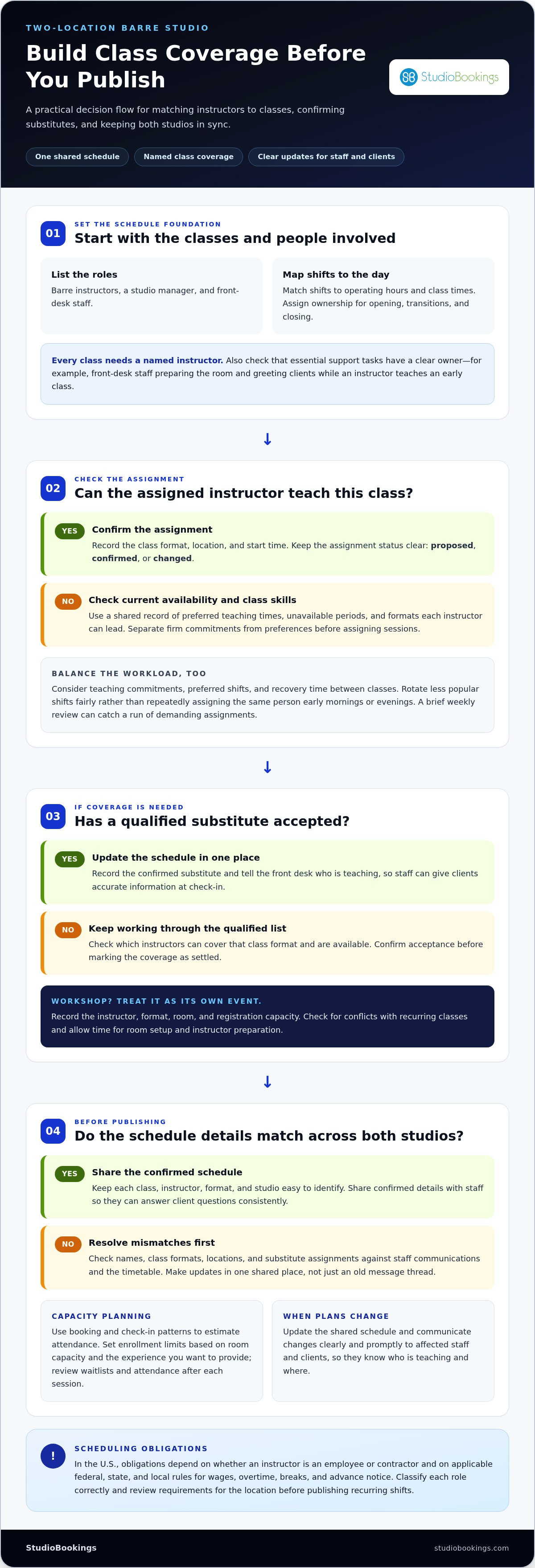
Start with the classes your barre studio needs to run, then match instructors to each session. A clear schedule also accounts for workshops, instructor availability, and coverage when plans change.
List each role that affects a class: barre instructors, a studio manager, and front-desk staff. Then map shifts to opening hours and class times. For example, an instructor may teach an early class while front-desk staff prepare the room and greet clients. Check that every class has a named instructor and that someone owns key opening, transition, and closing tasks.
To balance workloads and reduce burnout, consider each instructor’s teaching commitments, preferred shifts, and recovery time between classes. Don’t assign the same person every early morning or evening simply because they’re available. Rotate less popular shifts fairly, and invite instructors to flag conflicts before finalizing the schedule. A brief weekly review can catch a run of demanding assignments before it becomes the norm.
Set up a substitute process before an instructor cancels. Keep a current list of qualified instructors, the class formats they can cover, and their availability. When a change comes in, find a suitable substitute, confirm they’ve accepted, and update the schedule in one place. Tell the front desk who’s teaching so clients get accurate information at check-in.
In the U.S., scheduling obligations depend on whether an instructor is an employee or contractor and on applicable federal, state, and local rules for wages, overtime, breaks, and advance notice. Classify each role correctly and review requirements for the location before publishing recurring shifts.
Schedule workshops as distinct events, not informal additions to the regular timetable. Record the instructor, format, room, and registration capacity, then check for conflicts with recurring classes. For example, a weekend technique workshop should leave enough time for room setup and instructor preparation. Share confirmed details with staff so they can answer client questions consistently.
Unlimited studio class passes make accurate capacity planning especially important. Estimate expected attendance using booking and check-in patterns, then set each class’s enrollment limit based on room capacity and the experience you want to provide. Review waitlists and attendance after each session. If a popular evening class regularly fills, consider adding another time or instructor to meet demand without overloading the current team.
Before publishing, review the schedule from both the instructor’s and client’s perspective. Confirm that names, class formats, locations, and substitute assignments match across the timetable and staff communications. This final check helps prevent mix-ups, such as a client arriving for a workshop while the team expects a regular class.
Availability records help only when they reflect real constraints. Ask instructors to share preferred teaching times, unavailable periods, and class formats they can lead. For example, an instructor might be available for evening barre classes but unavailable for weekend workshops. Record these details in one shared planning document and consult it before assigning sessions.
Separate firm commitments from preferences. A recurring caregiving commitment differs from a preferred shift, and a planned training day differs from an open calendar slot. Give instructors a consistent way to report changes, such as a shared availability form. Review new entries before creating the next timetable, so outdated assumptions don’t lead to scheduling conflicts.
Use a simple status for each class assignment: proposed, confirmed, or changed. Instructors can review proposed classes and flag conflicts before the schedule is published. Once confirmed, record the class format, location, and start time. If availability changes, update the record and notify everyone affected instead of relying on an old message thread.
Attendance records add context to scheduling decisions. At check-in, mark who attended, cancelled, or didn’t arrive. Keep booking status separate from attendance: a reservation alone doesn’t show who entered the studio. For example, if a class has several bookings but fewer attendees, record both figures clearly rather than treating them as interchangeable.
After each class, compare reservations with actual attendance. Note whether a waitlist formed, late cancellations affected the room, or a substitute taught. These details help you spot patterns without guessing. A recurring waitlist may point to demand for that format or time, while low attendance across several sessions may prompt a review of class placement or instructor availability.
Use attendance data as a planning signal, not a scorecard. Compare similar classes and consider the day, time, format, and location. Attendance for an instructor’s class may vary depending on these factors. Discuss patterns directly before making changes, and invite the instructor to share context that booking records can’t show.
Keep records useful by assigning clear ownership. Designate a staff member to correct attendance after class and keep instructor availability current. Limit access to people who need the information for scheduling or studio operations. If a client disputes a booking or an instructor questions an assignment, consistent records of availability, schedule changes, and check-ins give the team a clear timeline.
During schedule reviews, use the combined records to make specific decisions: keep a class time, adjust an assignment, or find coverage. Document the reason for each change and share updated details with affected instructors. This turns availability and attendance into practical scheduling inputs, rather than separate records staff must reconcile by hand.
Effective Barre Studio Staff Scheduling across two locations starts with one shared calendar. Keep each studio’s classes, staff shifts, and room assignments visible together. Label locations clearly, such as “North Studio” and “South Studio.” A Tuesday evening class at one site should never be confused with the same format at the other.
Use consistent names for classes, roles, and schedule statuses. Record the location beside every instructor assignment, including workshops and coverage shifts. If each site has different room layouts or opening tasks, add location-specific notes. A shared structure makes schedules easier to compare while preserving the details each studio needs.
Plan each site’s timetable around its operating pattern. Show when rooms are occupied, who opens, and who handles transitions. Before assigning an instructor to sessions at both studios, check the timing and travel requirements. Back-to-back classes at separate sites can create a practical conflict, even when neither calendar looks full.
For a studio with two locations, Barre Studio Staff Scheduling also needs clear ownership. Decide who can edit the shared calendar, who approves changes, and who communicates them to each site. A manager overseeing daily operations and staff across both locations needs a reliable view of local assignments, not separate schedules that drift apart.
Review coverage across both calendars before publishing. Look for overlapping instructor assignments, unstaffed opening duties, and classes competing for the same room. Ask a lead at each site to review local details, then resolve conflicts through one central process. This brings together location-specific knowledge and a single source of truth.
If an instructor requests a shift change at South Studio, check their North Studio commitments before moving the class. Confirm the revised assignment, update the shared record, and notify staff who rely on the original timing. This catches conflicts that a location-only calendar can hide.
Make schedule changes traceable. Record what changed, which location is affected, and who approved the update. If a substitute is assigned, list them beside the correct class and site. Staff shouldn’t have to compare old messages with a newer calendar to find out who’s teaching.
Finally, test the schedule from each site’s perspective. Can an instructor quickly find their location and assignment? Can front-desk staff identify the right room and opening coverage? If not, simplify labels or clarify ownership before sharing the timetable. A shared schedule works when both locations can act on the same current information.
A schedule change affects more than the instructor’s calendar. A client may have arranged travel around a class time or booked a favorite teacher. If the Tuesday evening barre class moves, update the booking details and tell registered clients directly. Clear notice helps them decide whether the revised time still works.
Use a simple disruption plan for instructor cancellations, room closures, and timetable changes. First, identify the affected class and clients. Next, confirm whether a suitable replacement instructor or alternative class is available. Then send one clear update through the studio’s usual client communication channel. Avoid sending different versions through separate staff messages.
Make every update specific. Name the class, original time, revised details, and any action clients need to take. For example: “The Thursday barre class will be taught by Maya at its scheduled time.” If the class moves to another room, name it. Clients shouldn’t have to guess whether their booking still applies.
When a class must be cancelled, explain the change plainly and describe the next step. If clients can book another session, share the options through the studio’s usual booking process. If staff need to handle a reservation, say so clearly. A vague cancellation notice leaves clients uncertain about their booking and next visit.
Plan for clients who don’t see an update before arriving. Give front-desk staff a current list of affected sessions and a short explanation to share. For example, if the usual instructor is replaced, staff can confirm the substitute’s name and class format at check-in. Consistent answers prevent confusion at the studio entrance.
Track disruption patterns alongside client feedback. If a specific class repeatedly changes instructors, note the dates and review the schedule instead of treating each event separately. If clients report difficulty with a new time, record their feedback alongside the affected class. These details help distinguish a one-off adjustment from a recurring scheduling problem.
Protect the client experience after an immediate change. Confirm that the timetable, booking page, and staff notes all show the same details. Then check that clients received the update and that the replacement class suits the session they booked. For example, a client expecting a barre fundamentals class needs accurate information if the substitute teaches a different format.
A barre studio schedule should cover teaching, client check-in, and daily operations. Start with the class timetable, then assign someone to each task around it. For example, an instructor leads the session while front-desk staff manage arrivals and bookings. A studio manager oversees the day’s operations and handles staffing gaps.
Instructor shifts follow the class schedule, but teaching isn’t the only work to account for. Include time for room preparation, client questions, and transitions between sessions. A morning instructor may need access before the first class, while an evening shift may include resetting the room afterward. Write these responsibilities into the shift plan so they don’t become assumptions.
Match front-desk coverage to client arrival and departure patterns. Schedule staff to welcome clients, answer booking questions, and handle check-ins during busy transitions. For example, if one session ends as another begins, account for both arrivals and departures. Assigning a named staff member to the desk avoids leaving instructors to manage check-ins while preparing to teach.
A barre studio manager’s schedule often needs to cover more than one class block. The role is full-time and on-site, with a mix of early mornings, evenings, and some weekends. Plan the manager’s duties around operational needs, such as reviewing coverage, supporting staff, and addressing issues that affect the day’s classes.
Use a shift map to expose gaps before publishing the roster. List each class and the support tasks surrounding it. Then assign an owner for opening, check-in, room transitions, and closing. A 6am class, for example, requires a clear opening plan and an instructor assigned to teach. Avoid placing every responsibility on the instructor when other staff can handle studio operations.
Make role expectations clear in the schedule. Distinguish an instructor’s teaching assignment from a manager’s operational shift or a front-desk coverage block. If a staff member holds two roles, show both responsibilities and their timing. Clear assignments make handoffs easier and help the team spot overlapping duties before they affect class preparation.
Review the roster against the studio’s actual timetable whenever classes change. A new weekend workshop may require front-desk coverage alongside the instructor, while a cancelled class may leave a shift without its original purpose. Update assignments and notify affected staff together. To coordinate class and team schedules in one workflow, explore studio scheduling tools.
StudioBookings gives barre studios one dashboard for class schedules, staff, memberships, and payments. Its Pilates and Barre Studio Software brings day-to-day management tasks together, including coordinating class changes and instructor assignments across locations.
StudioBookings is a practical next step when schedules, attendance, and member records are scattered across separate tools. Studio owners and members can use the StudioBookings Mobile App as part of the studio experience. You can explore the platform with a free trial, with no contract required.
If you’re ready to simplify studio operations, visit studiobookings.com to learn more about StudioBookings.
Your next schedule is an opportunity to create a calmer routine for staff and clients. Start with one practical improvement, such as recording instructor availability in a shared system or setting a consistent process for schedule changes. Then build on what works. Strong Barre Studio Staff Scheduling isn’t a one-time task; it’s a studio habit that can adapt as your classes and team change.
StudioBookings brings class scheduling, staff management, memberships, and payments into one cloud-based dashboard. Its offerings include Yoga Studio Software, Pilates and Barre Studio Software, and Fitness and HIIT Studio Software. If you’re ready to move scheduling out of scattered documents and into a studio management platform, explore how StudioBookings could fit your workflow.
Contact StudioBookings about staff scheduling and take the next step toward a schedule your team can manage with confidence.
Assign a lead instructor to each class, then plan weekly coverage around the published timetable and instructors’ availability. The total depends on how many classes run at the same time, which formats require specific teaching skills, and how much backup coverage you need. For example, two simultaneous classes need separate instructors. Keep a qualified substitute option for sessions where a cancellation would leave clients without the class they booked.
Use one written process for availability and time-off requests, with a clear deadline for each scheduling cycle. Ask instructors to separate firm commitments from preferred shifts. For example, record a recurring evening commitment as unavailable, while noting a preferred morning as flexible. Confirm approved time off in the shared schedule and check affected classes before publishing, so instructors aren’t assigned during a known absence.
Choose software that combines class scheduling, staff management, and attendance records. StudioBookings offers Pilates and Barre Studio Software, with class schedules, staff management, and attendance reporting in one dashboard. This can suit a studio replacing separate calendars and attendance sheets. Before adopting a tool, map how your team handles instructor assignments and check-ins, then assess whether the workflow fits those tasks.
Prevent conflicts by recording availability, approved leave, teaching formats, and location commitments before assigning classes. Have instructors review proposed schedules and flag overlaps before publication. For example, check that a teacher assigned to back-to-back classes can travel between rooms and prepare. Keep a current coverage list for unexpected absences, and record schedule changes in one shared place so staff don’t rely on outdated messages.
Use booking patterns and attendance records to identify popular and quieter sessions, then match staffing to each class’s needs. A full evening class may need clear check-in coverage during arrivals, while a quieter midday session may require fewer front-desk tasks. Review patterns by class format and time, not just overall attendance. Adjust assignments as demand shifts, and communicate timetable changes before staff plan their availability.
Keep a current list of instructors who can teach each barre format, along with their preferred contact method and availability. When an instructor cancels, find a qualified match, contact them directly, and record their acceptance before changing the assignment. Then update the staff schedule and tell the front desk who’s teaching. If no substitute is available, decide promptly whether to offer clients another class or cancel.
Scheduling obligations depend on whether an instructor is an employee or contractor and on applicable federal, state, and local rules for wages, overtime, breaks, and advance notice. Classify each role correctly and review the requirements for the studio’s location before publishing recurring shifts.