
A discount alone is rarely the strongest way to bring former members back. To learn how to win back former Pilates members, start with a personal invitation, offer a reward that recognizes their return, and create a welcoming way to experience the studio again. Member events and approachable classes...
A discount alone is rarely the strongest way to bring former members back. To learn how to win back former Pilates members, start with a personal invitation, offer a reward that recognizes their return, and create a welcoming way to experience the studio again. Member events and approachable classes can make that first step feel more inviting than a sales pitch.
It’s understandable to think a former member simply needs a better deal. But people leave for different reasons, so a thoughtful approach starts by showing them they’re remembered and offering a relevant reason to reconnect. Shape rewards, events, and classes into a practical win-back plan, then follow up clearly so former members can decide whether your studio feels right for them again.
• Make loyalty rewards feel personal and relevant, rather than relying on a generic discount to bring former members back.
• Use member-only events and welcoming classes to give people an easy, low-pressure reason to reconnect with your studio.
• Look for patterns in attendance and membership history to group former members and tailor your outreach to what may matter to them.
• Keep win-back emails and texts warm, brief, and clear, with a specific invitation and a simple next step.
• Use Pilates and Barre Studio Software to manage schedules, memberships, payments, and staff in one place as you organize your retention efforts.
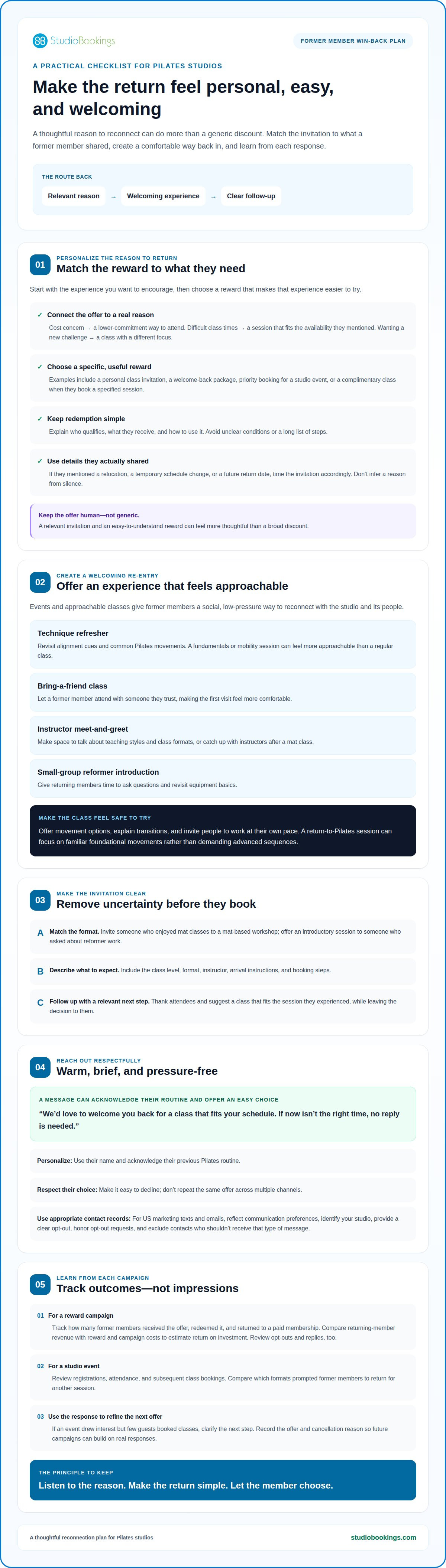
A useful loyalty reward gives a former member a specific reason to try your studio again. Start with the experience you want to encourage, such as booking a return class or bringing a friend to a small-group session. Then choose a reward that supports that action. A personal class invitation, a welcome-back package, or priority booking for a studio event can feel more thoughtful than a broad discount. A practical plan for how to win back former Pilates members begins with a reward tied to a genuine reason to return.
Keep the reward simple to understand and easy to redeem. Explain who qualifies, what they receive, and how to use it. For example, offer a former member a complimentary class when they book a specified session. Avoid unclear conditions or a long list of steps. The goal is to remove friction, not create another task before someone can return.
For US marketing texts and emails, use contact records that reflect each person’s communication preferences, identify your studio, and provide a clear way to opt out. Honor opt-out requests and exclude contacts who shouldn’t receive that type of message.
Contact a former member after their cancellation is processed, while their reason for leaving is still useful context. If they shared a future return date or temporary schedule change, time the invitation accordingly. Someone who left during a work relocation may appreciate a note when they expected to return, while a member with a packed schedule may prefer a flexible class option.
Tailor the reward to the reason the member left. If cost was a concern, offer a lower-commitment way to attend again rather than pushing a long membership. If class times were difficult, highlight a session that fits the availability they mentioned. If they wanted a different challenge, invite them to a class with a new focus. Use details the member actually shared, not assumptions based on silence.
Keep the invitation warm and pressure-free. Use the member’s name, acknowledge their previous Pilates routine, and make it easy to decline. For example: “We’d love to welcome you back for a class that fits your schedule. If now isn’t the right time, no reply is needed.” Send a relevant invitation, then respect their choice instead of repeating the same offer across multiple channels. This personal approach helps studios win back former Pilates members without making outreach feel pushy.
Measure results by campaign, not by a general impression that outreach worked. Track how many former members received the offer, redeemed it, and returned to a paid membership. Compare revenue from returning members with reward and campaign costs to estimate return on investment. Review opt-outs and replies, too. A reward that brings bookings but prompts unwanted messages may need a different audience or approach. Record the offer and cancellation reason so the next campaign can build on real responses.
A studio event can make returning feel social rather than transactional. Invite former members to a Pilates fundamentals workshop, a mobility session, or an instructor-led studio open house. Give each event a clear focus and explain what participants will do. A technique refresher may feel more approachable than a regular class to someone unsure about restarting.
Choose formats that help guests reconnect with the studio’s people and routines. A small-group reformer introduction gives returning members time to ask questions and revisit equipment basics. A mat class followed by informal conversation leaves room to catch up with instructors. Describe the event specifically so guests know whether it suits their experience and comfort level.
Design the class as a welcoming re-entry point. An instructor can offer movement options, explain transitions, and invite participants to work at their own pace. For example, a return-to-Pilates session might focus on familiar foundational movements rather than demanding advanced sequences. Clear class information helps former members decide whether they’re ready to book.
Revisit alignment cues and common Pilates movements.
Let a former member attend with someone they trust.
Create space to discuss teaching styles and class formats.
Make the invitation specific to the event, not a broad announcement. Someone who previously enjoyed mat classes could receive details about a mat-based workshop. A member who asked about trying reformer work could get an invitation to an introductory session. That match shows you listened without assuming why they left.
Remove practical barriers before the event begins. Share the class level, format, instructor, arrival instructions, and booking steps in the event details. Make the booking route straightforward, and keep the schedule information current. A clear class booking and schedule process can help guests understand how to reserve their place.
After the event, follow up with a useful next step. Thank attendees, then suggest a class that matches the session they experienced. If someone attended a mobility workshop, for instance, point them toward a suitable class focused on controlled movement. Keep the message relevant and let the former member decide whether to continue.
Review each event’s registrations, attendance, and subsequent class bookings. Compare which formats prompted former members to return for another session. If an open house drew interest but few guests booked classes, clarify the next step in future invitations. Use responses to shape events around real member interests, rather than repeating a familiar format without checking its results.
A missed class can signal a temporary disruption, while a cancellation records a clear decision. Neither tells the whole story. A member might leave because work hours changed, travel became difficult, or a class no longer suited their experience. Another may still value Pilates but find booking or getting to the studio inconvenient. Treat each departure as a different situation, not proof that someone lost interest.
Schedule friction often builds gradually. A member who regularly booked evening reformer classes may stop attending after a shift change. If popular sessions fill before they can book, membership can feel less useful. Travel time, family responsibilities, and changes in routine can also make a once-manageable schedule hard to maintain. These members may respond to options that fit their current availability.
Other reasons involve the class experience itself. Someone new to Pilates might feel lost when movements change quickly or instructions assume prior experience. A returning member may want more challenge than their usual session provides. Instructor changes, class format, studio atmosphere, and a lack of personal connection can all affect whether someone feels they belong. A specific comment about pace or teaching style offers a more useful clue than attendance alone.
A member may pause spending during a household budget change.
Someone focused on gentle movement may no longer enjoy a faster class.
A member may need a break after discomfort or an interruption to their routine.
Relocation, caregiving, study, or a new work schedule can disrupt attendance.
A member may not feel their available classes justify continuing.
Look for the difference between a stated reason and an underlying obstacle. “Too busy” could mean class times clash with work or booking feels difficult. A brief, respectful cancellation conversation can clarify which issue mattered most. Ask one open question, such as what would have made attending easier, and record the answer in the member’s own words.
Attendance patterns can add context, but they shouldn’t replace a direct explanation. Several missed bookings followed by a cancellation may point to a schedule mismatch. A member who attended consistently before leaving may have experienced a sudden change, such as moving away. Use those clues to shape a relevant invitation later rather than assuming every former member needs the same message.
Finally, distinguish reasons you can address from circumstances you can’t. A clearer class description may help someone choose a suitable level. A change in location may make regular attendance impractical. Understanding the difference helps a studio respond with empathy and avoid treating every cancellation as a problem a promotion can solve.
Start with a clean membership list, separating former members from active members and current pauses. Use each profile’s membership status, cancellation date, last attended class, and stated reason for leaving. These details help distinguish a completed membership from a temporary break. Remove duplicate profiles so one person doesn’t receive the same invitation twice.
Next, group members by details that can shape the message. A former reformer member may respond to an equipment-focused session, while a mat regular may prefer a familiar class. Someone who left after a schedule change needs different information from someone who paused for travel. Use information they shared rather than guessing from a quiet account or missed booking.
Keep each segment focused enough to describe in one clear sentence. For example, “former evening members who mentioned work conflicts” is more useful than “inactive contacts.” A focused group makes it easier to choose a relevant invitation, reward, or event. It also gives you a practical way to compare campaign responses.
Separate schedule, budget, location, and class-experience concerns.
Group reformer, mat, beginner, and advanced-class attendees.
Distinguish long-term members from people who attended briefly.
Note whether a former member replied, attended an event, or ignored previous outreach.
Build segments through a consistent review process. First, confirm the membership has ended. Then record the member’s stated reason and most recent class type. Finally, assign the profile to the closest campaign group. If someone mentioned both a move and a schedule conflict, use the reason most relevant to a realistic return invitation.
Keep contact preferences alongside these groups. A former member who opted out of texts should not receive a text campaign. If a contact’s permission or preferred channel is unclear, leave them out of that campaign until the record is resolved. Accurate preferences protect the relationship and keep outreach focused.
Review segments before sending. Confirm that the invitation matches the group, the class or event is still available, and the message reflects the member’s actual history. A campaign for former morning-class attendees, for instance, should offer a relevant morning option. Remove members who have rejoined, asked not to be contacted, or no longer fit the segment.
After outreach, record outcomes against the same profile. Note replies, bookings, attendance, and renewed memberships. If former mat members book a workshop but don’t return to regular classes, the next message can suggest a suitable follow-up class. This feedback makes segmentation an ongoing process, not a one-time list export.
A good win-back message sounds like a real person, not an automated promotion. Start with the former member’s name and one relevant detail, such as a class they enjoyed or a reason they shared for leaving. Then make one clear invitation. A message about a new morning mat class feels more useful to someone who previously asked for earlier sessions.
Keep the subject line or opening direct. “A Pilates class that fits your mornings” tells the reader what the email offers. Avoid vague openings like “We miss you” if they give no reason to keep reading. In a text, identify your studio up front so the recipient knows who sent it.
Build the message around three parts: a personal reference, a relevant return option, and one next step. For example: “Hi Jamie, you mentioned evening classes no longer worked with your schedule. We’ve added a morning mat session that may suit you. View the class details and book if you’d like to join us.” Keep it warm and specific.
Choose a class, event, or return offer that fits the recipient.
Tell them how to view details or reserve a place.
Let the former member decide without a false deadline.
Match the channel to the message. Email gives you room to explain a workshop, introduce an instructor, or share class details. Text works better for a short invitation with a direct booking step. Don’t send the same copy through both channels at once. Repeated messages can make a thoughtful invitation feel like a sales sequence.
Personalization should be accurate, not overly familiar. Mention a member’s previous reformer class only if that information is recorded correctly. If the reason for leaving is unknown, use a neutral invitation rather than guessing about their schedule or budget. A simple “We’d be glad to see you in class again” avoids assumptions.
Before sending, review the recipient, offer, booking details, and opt-out language. Keep a copy of each version so you can connect replies and bookings to the message that prompted them. Compare which subject lines, invitations, and class types lead to meaningful responses, not just opens.
Use studio management tools to keep membership and class details organized as you prepare targeted outreach. A clear record helps your team send relevant messages, avoid duplicate invitations, and follow up based on each former member’s response.
StudioBookings helps Pilates studios manage class schedules, memberships, payments, and staff from one dashboard. When win-back outreach becomes hard to coordinate across spreadsheets and separate tools, Pilates and Barre Studio Software brings those studio operations together. Keep class information organized while managing membership records and payments in the same platform.
StudioBookings also includes a mobile app for studio owners and members, making studio information accessible on the go. It’s a practical next step when you’re ready to streamline the administration behind member retention and re-engagement. Explore how the platform can fit your studio’s routine.
Contact StudioBookings to talk about your studio’s needs.
A win-back effort can also help you build a more responsive studio. Treat each reply, booking, or quiet decline as useful guidance for future member communication. Over time, those signals can help you create a more welcoming experience for people at different points in their Pilates routine.
That’s the practical heart of how to win back former Pilates members: make it easier for someone to picture returning while respecting their choice. The same organized approach can support your day-to-day studio operations. StudioBookings offers Pilates and Barre Studio Software, along with Yoga Studio Software and Fitness and HIIT Studio Software, to help manage studio schedules, memberships, payments, and staff.
If you’re ready to bring your studio operations together, contact StudioBookings to reconnect. Take the next step at a pace that works for your studio, and keep building member relationships with care.
A class-pass bundle can give former members a low-commitment way to see whether your current schedule and teaching style suit them. Make the offer distinct from a single complimentary class by explaining how the pass works and which sessions it covers. For example, a returning member could choose among eligible mat classes before deciding whether to resume a membership. Clear terms make the offer easier to assess and accept.
Studios can consider a reduced-rate introductory membership period or a lower-priced class-pass option, choosing based on capacity and retention goals. Before setting a discount, work out how much revenue each option needs to generate and whether it fits class availability. Explain the regular price after the offer, its end date, and any booking conditions clearly. Avoid incentives that make the ongoing membership value confusing.