
The next advantage in fitness won’t come from adding every new trend. Future-proofing your fitness business in 2026 means building flexible membership options, useful coaching technology, stronger retention habits, and sound financial practices. These foundations help your business adapt while keepi...

The next advantage in fitness won’t come from adding every new trend. Future-proofing your fitness business in 2026 means building flexible membership options, useful coaching technology, stronger retention habits, and sound financial practices. These foundations help your business adapt while keeping the member experience at the center.
You already know that what works today may not be enough tomorrow. Members expect convenient ways to train, personal support, and reasons to keep showing up. The challenge is deciding what to build next without adding complexity for its own sake.
This article breaks down the practical priorities: how to shape tiered, hybrid, and specialty memberships; where AI, wearables, and workout data can support coaching; and how to make engagement and retention part of the everyday experience.
You’ll also find practical guidance on cash reserves and financial forecasting, so growth plans rest on a steadier operating foundation. The goal is a business that evolves with its members instead of chasing every passing trend.
• Build a fitness experience around belonging and flexible programming, not just a list of classes.
• Use tiered and hybrid memberships to give members more ways to fit training into their lives.
• Let coaching technology and workout data support personal guidance while keeping the human connection central.
• Make it easier for members to stay consistent with a clear journey from first class to ongoing progress.
• Use cash reserves and regular forecasting to give growth plans a steadier financial foundation.
Build around community, flexible programming, and a clear reason to return. Fitness consumers show demand for new ways to get fit, while 64% say a good-vibe environment makes them more likely to work out. Group strength participation increased from 30% in 2018 to 36%. These trends give boutique studios, traditional gyms, and online fitness businesses different opportunities: studios can deepen instructor-led community, gyms can serve varied training needs, and online businesses can make workouts easier to access. The strongest choice depends on the experience members value and the resources your business can support.
Make group training feel welcoming, not intimidating. Among Gen Z and Millennials, 45% seek out group workouts, so a studio can build community through consistent class formats, approachable introductions, and instructor-led progress check-ins. For example, pair a beginner strength class with a regular small-group session where familiar members train together. Then create a clear progression into more challenging classes. This helps members see a next step without making newcomers feel they must already know the routine.
For U.S. gyms and studios, relevant rules can involve accessibility, workplace safety, employment, consumer protection, privacy, and local building requirements. Which requirements apply depends on the facility, its staff, location, and how it handles member information; there isn’t one universal 2026 rule that answers every gym’s compliance needs. Build time into planning to review the requirements relevant to your operations before making changes to your space, policies, or member-data practices.
Show value through what a membership includes, not just its class count. Explain the difference between open access, coached group training, and specialty sessions, then match each tier to a distinct member need. Revenue can also come from services beyond recurring memberships, such as workshops, introductory programs, specialty classes, or individual coaching. For software, AI tools, and connected equipment, costs depend on features, usage, equipment choices, and integrations; pricing is provided after a quote request. Compare each investment with the member experience or operational need it supports.
Local U.S. trends shape both programming and pricing. A neighborhood with strong demand for group strength may respond to coached formats, while an area with limited studio access may value convenient online options. Review class attendance, waitlists, trial-to-membership conversions, and member feedback by program. Use those signals to decide which classes to add, adjust, or retire. Explain pricing in terms of instructor support, schedule choice, and access, so members can see what each option delivers.
A practical approach to future-proofing your fitness business in 2026 is to test changes in focused steps. Pilot one new class format, gather member feedback, and assess bookings and repeat attendance before expanding it. Treat community-building as part of the program design: familiar faces, clear progressions, and a welcoming first class can make the difference between a single visit and a routine. Keep the offer specific, communicate its value plainly, and let member response guide what you build next.
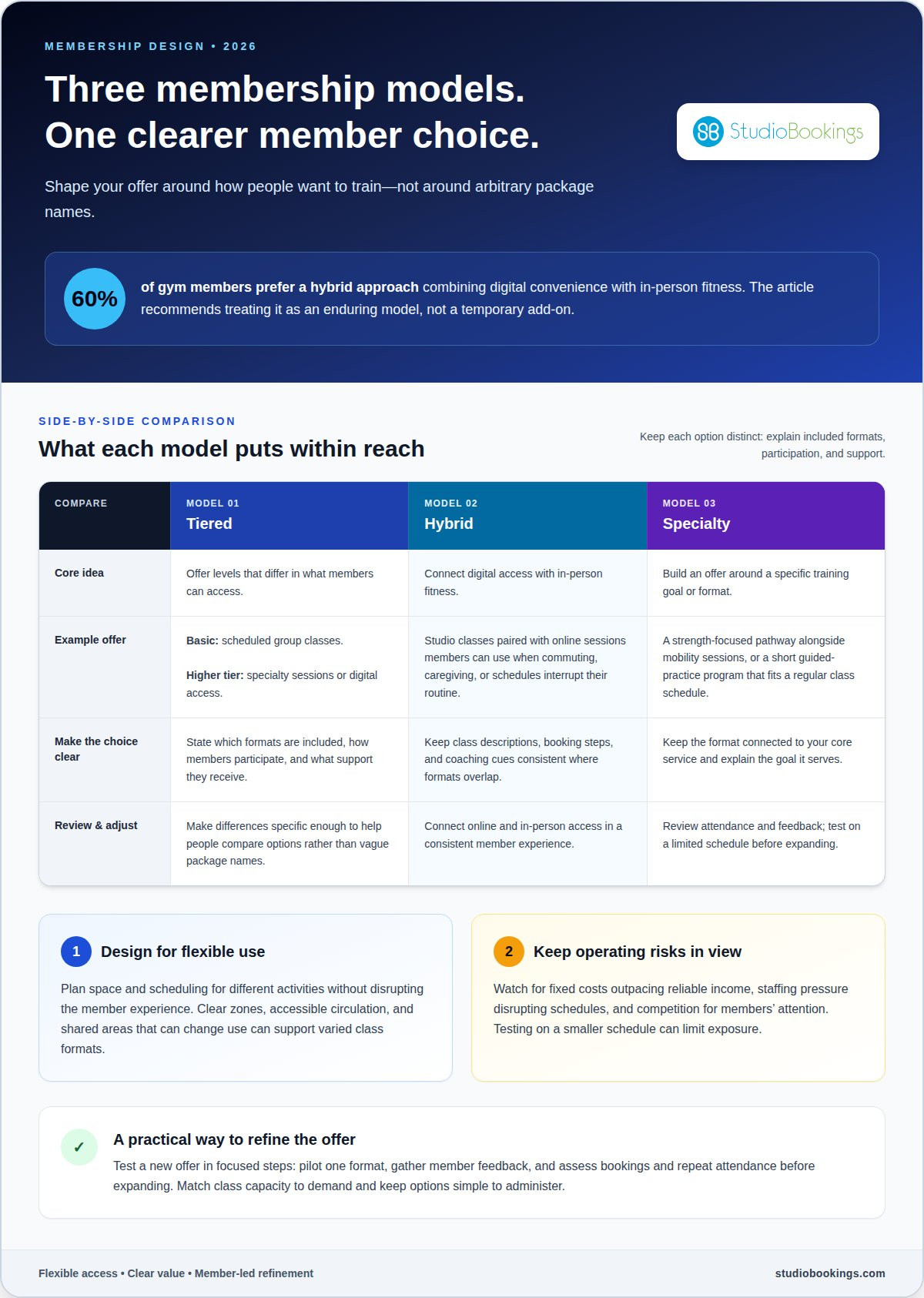
Build membership choices around how people want to train, not around arbitrary labels. A hybrid model combines digital convenience with in-person fitness, and 60% of gym members prefer this approach. Treat it as an enduring business model, not a temporary add-on. For example, pair studio classes with online sessions members can access when commuting, caregiving, or schedules interrupt their usual routine.
Make each membership tier distinct enough to guide a decision. A basic option might provide scheduled group classes, while a higher tier could add specialty sessions or digital access. State the differences plainly: which formats are included, how members participate, and what support they receive. Clear details help people choose what suits them instead of comparing vague package names.
Specialty memberships can serve specific goals without reshaping every class. A studio might offer a strength-focused pathway alongside mobility sessions, or a short program that combines guided practice with a regular class schedule. Keep each format connected to your core service. Review attendance and feedback, then adjust the schedule as demand shifts. A limited test lets you assess an idea before expanding it.
Adaptive design matters as membership models evolve. Plan space and scheduling to support different activities without disrupting the member experience. Clear zones, accessible circulation, and flexible use of shared areas can help casual participants feel comfortable while experienced members train seriously. Design the facility so programming can change without requiring major reconstruction.
Accessibility and inclusion start with practical layout choices. Define activity zones and routes around how people move, then consider how each area serves beginners, experienced members, and different class formats. A flexible room, for example, can host a lower-impact session at one time and focused strength training later.
Key risks include fixed costs outpacing reliable income, staffing pressure disrupting schedules, and competition for members’ attention. Limit exposure by testing new offers on a smaller schedule, matching class capacity to demand, and keeping membership options simple to administer.
Keep online and in-person access connected through a consistent experience. Use the same class descriptions, booking steps, and coaching cues where formats overlap. Mental wellbeing can also inform your offer: members may value a calmer mobility session alongside higher-intensity training. Explain the purpose of each option, then use participation patterns to decide what stays on the timetable.
Review whether your facility can support different business models without confusing members. Standardize practical elements for durability and ease of maintenance, while customizing details that express the studio’s identity and improve usability. This balance helps you adapt programming, use space effectively, and keep the experience recognizable as your offer grows.
Use technology to make coaching more useful, not less personal. 52% of gym members use mobile apps to track workouts, and 80% rely on wearables to monitor progress. Those figures point to a practical opportunity: connect member activity with coaching that helps people interpret their efforts. Start by choosing one useful question, such as whether members are attending consistently or progressing through a training plan.
AI coaching can organize information into a useful next step for members. For example, a digital coach might use someone’s stated goal and completed sessions to suggest a suitable workout. Keep recommendations focused and easy to discuss with a trainer. Human coaches remain essential for technique, motivation, and context that activity data cannot capture.
Before adding an AI tool, map its role in the member journey. Decide what information it uses, what it produces, and who reviews the output. A focused pilot could recommend classes after a member completes an introductory session. Compare participation and follow-up bookings before extending the tool to other offerings.
Wearable data can add context to workouts, but more information does not automatically mean better coaching. Choose a small set of signals that supports a clear goal, such as tracking activity across training sessions. Explain simply how members can use those signals. A device reading is not a complete picture of someone’s wellness or ability.
Connect data to decisions staff can act on. A coach, for example, might notice that a member has stopped booking a regular class and send a personal check-in. A studio might review attendance patterns to see whether a class time suits its members. Keep responses specific and human instead of sending a generic message whenever an app records activity.
Set clear boundaries before collecting or sharing information. Tell members what data a feature uses and how it supports their training experience. Guide staff on which details belong in a coaching conversation. Keep the process simple: define the purpose, limit access to people who need it, and review whether the information improves a real interaction.
Measure a pilot against outcomes that matter to your business. Track whether members use the feature, return to classes, or engage with coaching recommendations. Refine the experience before adding more tools. This focused approach lets technology support participation and personal attention while keeping workouts and wellness goals connected to your team’s coaching.
Make the member journey easier to continue, not just easier to start. 41% of fitness consumers see exercise as a chore, while 25% of current club members say being too busy stops them working out more. Those barriers call for practical programs: clear next steps, convenient booking, and timely support. For example, offer a short class option alongside a longer session, so a full calendar doesn’t automatically mean a missed workout.
Design a connected journey through discovery, social interaction, focused training, and progression. Make the first visit simple with clear class descriptions and an easy booking process. At the first class, introduce the instructor and explain what to expect. Afterward, recommend a relevant next session instead of leaving newcomers to search the timetable alone.
Use a member’s first few visits to help build a routine. An instructor can welcome a newcomer by name, explain equipment before class, and suggest a suitable follow-up. Someone who attends an introductory strength session, for instance, could be recommended another coached class. These personal touches clarify the next step without overwhelming a new member with every program at once.
Completion improves when members can see progress in manageable stages. Structure a program around a specific outcome, such as building confidence with basic strength movements. Show the skills covered in each session, then recognize completed milestones in person. The 2026 Hyperhuman benchmark found that new workouts under 15 minutes made up 45.1% of workouts. Short formats can offer another practical entry point for members with limited time.
Build engagement into the schedule instead of relying on occasional campaigns. A recurring class, instructor check-in, or small-group training block gives members a predictable reason to return. A weekly mobility class, for example, can complement demanding workouts and create a familiar point of contact. Make the purpose and level clear in the timetable so members can choose a session that suits them.
Use attendance patterns to spot friction early. If a member who regularly booked evening classes stops attending, a personal message can ask whether another time or format would help. If a class repeatedly has low participation, review its timing, description, and fit with nearby offerings before changing the whole program. These specific signals make retention efforts more useful than sending everyone the same reminder.
Track engagement through actions that show ongoing involvement: repeat bookings, program completion, and returns after an absence. Review these patterns alongside member feedback, then make one focused adjustment at a time. A clearer class description or more suitable follow-up can remove a small barrier before it becomes a reason to leave. Consistent attention to details supports lasting retention.
Cash reserves give a fitness business room to manage uneven income and unexpected costs. A practical target is enough cash to cover three to six months of fixed costs. List recurring commitments such as rent, payroll, utilities, insurance, and software. Separate these obligations from flexible spending, such as a new class format or equipment upgrade. Your reserve target should reflect your actual operating needs.
Build a rolling forecast that connects expected income with upcoming expenses. Start with membership payments, class bookings, and other established revenue. Record when each payment is expected, not just when it is earned. Add fixed bills and variable costs, such as instructor hours that change with the timetable. Regular updates can reveal a cash gap before it affects daily operations.
Plan for more than one possible outcome. Create scenarios for a slower booking period, a timetable change, or an unexpected repair. For each, note which expenses stay fixed and which can be adjusted. A quiet month, for example, may reduce class income without changing rent. Comparing scenarios shows which decisions preserve cash and which could deepen a shortfall.
Set a simple review routine. Compare forecast income and spending with actual results, then identify the cause of significant differences. If a class generates fewer bookings than expected, review its schedule and operating costs before repeating the same plan. If income arrives later than forecast, revisit payment timing and upcoming obligations. Each review should lead to a specific adjustment, not just a revised spreadsheet.
Keep reserve money separate from funds set aside for planned projects. A repair reserve, for example, shouldn’t also serve as the budget for a new program. When you draw on reserves, record why and outline how the business will rebuild them. This maintains a clear view of your finances and prevents an opportunity from weakening your ability to meet fixed costs.
Before committing to expansion, estimate its full effect on cash flow. Include additional staffing, facility use, equipment, and ongoing operating needs, then compare those costs with realistic expected income. Consider whether the change meets a clear member need or creates a new revenue source. If your forecast depends on optimistic attendance, start with a smaller test and review the results before increasing your commitment.
Forecasting is most useful when it informs decisions, not when it becomes a reporting exercise. Assign responsibility for updating assumptions, reviewing cash movements, and sharing concerns with decision-makers. A consistent process can help you protect reserves while creating room for carefully chosen improvements. To bring everyday studio workflows into clearer view, organize your studio operations.
StudioBookings helps fitness and HIIT studios manage class schedules, memberships, payments, and staff from one dashboard. When you put new programs into practice, bringing these daily tasks together can help keep schedules and membership administration organized. That’s useful as your business adjusts its timetable or develops membership options.
StudioBookings also offers Yoga Studio Software, Pilates and Barre Studio Software, and Pole and Dance Studio Software. Choose the studio software that fits your business and use it to support your day-to-day operations. If you’re ready to explore a simpler way to manage your studio, contact StudioBookings.
Future-proofing your fitness business in 2026 doesn’t mean changing everything at once. Pick one operational pressure point that’s limiting your next step, then decide what improvement would make the biggest practical difference. That could mean simplifying how your team handles daily studio tasks or creating more room to focus on members. Set a clear priority, give it an owner, and revisit the decision as your business needs change.
Progress comes from making deliberate choices and learning from how they work in practice. You don’t need to chase every new idea. Build a business that can respond thoughtfully, support its team, and keep the member experience strong as it grows. If you’re ready to explore a practical next step for your studio, contact StudioBookings. Your next stage of growth can start with one clear decision.
U.S. businesses should watch demand for integrated wellness, strength training, and welcoming group experiences. Among members, 88% want yoga, breathwork, or meditation on club timetables. The American College of Sports Medicine ranked Exercise for Weight Management third among worldwide fitness trends for 2026, and Balance, Flow and Core Strength fifth. Consider how these interests fit your local members, existing instructors, and available schedule.
Prioritize technology that removes friction from members’ routines and staff’s daily work. A booking and management system can, for example, bring class schedules, memberships, payments, and staff administration into one workflow. Add tools when they address a defined need, such as helping members find a suitable class or giving managers clearer attendance reports. A focused pilot can show whether a tool earns its place.
Make it easier to address why a member is considering cancellation. Invite members to share what isn’t working, then group feedback into practical themes such as schedule fit, class level, or changing goals. Someone who can’t attend evening sessions, for example, may value a different class time. Use a personal conversation to offer a relevant option, and record recurring feedback to guide future program decisions.
Collect only the information needed for a clear coaching or operational purpose. Explain what a tool collects, how staff use its output, and who can access it. For example, an AI tool might suggest classes based on a member’s stated interests, while a coach makes the final recommendation. Limit staff access to relevant information, avoid unnecessary personal details, and set a clear process for deleting data that is no longer needed.
For future-proofing your fitness business in 2026, connect each investment to a specific business need. First, identify a bottleneck, such as class administration or inconsistent attendance reporting. Next, choose a tool or program that addresses it, assign an owner, and define what success looks like. Pilot the change, review member and staff feedback, and decide whether to adapt, expand, or stop before committing further resources.