
Your studio shouldn’t need you on call every hour to run well. To improve work-life balance as a studio owner, set clear working-hour boundaries, build flexibility into your schedule, protect focused work time, and communicate expectations with your team. A 40-hour week can be a starting point for p...

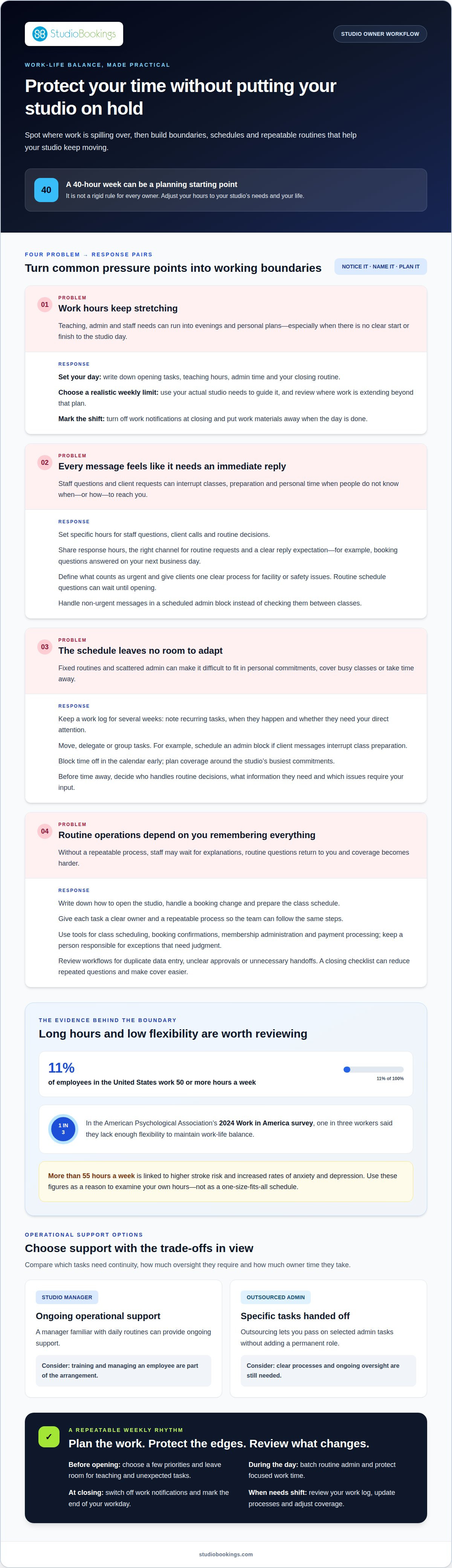
Your studio shouldn’t need you on call every hour to run well. To improve work-life balance as a studio owner, set clear working-hour boundaries, build flexibility into your schedule, protect focused work time, and communicate expectations with your team. A 40-hour week can be a starting point for planning, then you can adjust your schedule around the needs of your studio and your life.
It’s easy to let class schedules, staff questions, and admin tasks spill into personal time, especially when you care deeply about your business. A sustainable routine doesn’t mean caring less; it means deciding what needs your attention and when. This guide offers practical ways to set boundaries, plan your schedule, prioritize tasks, and communicate clearly with employees. You’ll also learn how smoother studio operations can help you step away without losing sight of what matters.
• Define what a sustainable work-life balance looks like for you, then use it to guide business decisions.
• Set clear availability expectations and build a studio schedule that leaves room for personal commitments.
• Group similar tasks, protect time for priority work, and document repeatable processes to make delegation easier.
• Ask employees what would improve their working experience and make communication a regular part of studio operations.
• Consider studio management software to bring class schedules, memberships, payments, and staff management into one dashboard.
Start by deciding when your studio day begins and ends. A 40-hour week can be a starting point for setting your work schedule, not a rigid rule for every owner. Write down your opening tasks, teaching hours, admin time, and closing routine. Seeing them together helps reveal where work is stretching into evenings or personal plans.
Long hours can carry real costs. In the United States, 11% of employees work 50 or more hours a week. Working more than 55 hours a week is linked to higher stroke risk and increased rates of anxiety and depression. Use those figures as a reason to examine your hours, then set a realistic weekly limit that reflects your studio’s actual needs.
Make your boundaries clear to the team. Set specific hours for staff questions, client calls, and routine decisions, then share them in your studio communications. For example, handle non-urgent messages during a scheduled admin block instead of checking them between classes. At closing, turn off work notifications and put your phone away when possible.
Tell clients when and how to reach you. Share your response hours, specify the right channel for routine requests, and set reply expectations, such as answering booking questions on your next business day. Consistent hours help clients know what to expect and protect time with friends and family.
For out-of-hours emergencies, define what counts as urgent and give clients one clear process to follow. Explain, for example, that a routine schedule question can wait until opening, while an immediate facility or safety issue should go through your designated urgent contact method.
Set boundaries around your workspace, too. If you work from home, use a dedicated desk or room for studio admin, then close it at the end of the workday. If space is limited, use the same setup each day and put work materials away afterward to mark the shift to personal time.
Hiring a studio manager provides ongoing operational support from someone familiar with daily routines, but it also requires training and managing an employee. Outsourcing admin lets you hand off specific tasks without adding a permanent role, though you’ll still need clear processes and oversight. Compare the tasks, continuity, and management time involved in each option.
Set manageable daily goals before opening your inbox. Choose a few priorities, such as confirming tomorrow’s schedule, preparing payroll, and following up on a staff issue. Leave room for teaching and unexpected tasks. This helps protect your energy and makes it easier to finish work at your planned time.
A studio’s schedule has to serve clients without making you the answer to every operational need. The American Psychological Association’s 2024 Work in America survey found that one in three workers say they lack enough flexibility to maintain work-life balance. For an owner, flexibility can mean shifting admin work around peak class times, protecting a regular personal commitment, or arranging coverage before taking time away.
Start with a short work log. For several weeks, record recurring tasks, when they happen, and whether they need your direct attention. Then identify what can be moved, delegated, or grouped together. If client messages interrupt class preparation, for example, set a specific admin block instead of replying throughout the day.
Delegation works best when each task has a clear owner and a repeatable process. Write down the steps for opening the studio, handling a booking change, or preparing the class schedule. Staff can follow the same instructions without waiting for you to explain each detail. Assign support based on which tasks take up the most owner time and need consistent coverage.
Automation can cut repetitive admin. Use tools for class scheduling, booking confirmations, membership administration, and payment processing. Keep a person responsible for exceptions, such as a complex account question, so automation supports good service without replacing human judgment.
Documented workflows can also expose inefficient steps. Review each process and remove duplicate data entry, unclear approvals, or unnecessary handoffs. A simple closing checklist, for instance, can prevent repeated questions and make it easier for another team member to cover.
To schedule time off, block it in the calendar early and plan coverage around the studio’s busiest commitments. Decide who will handle routine decisions, what information they need, and which issues require your input. Shared knowledge helps daily operations run without depending on your constant availability.
Burnout can show up as persistent exhaustion, irritability, difficulty concentrating, or losing interest in work you once enjoyed. Reduce pressure by reviewing your workload, restoring regular breaks and time away, and asking trusted people for practical support. If symptoms affect your health or daily life, speak with a qualified health professional about appropriate care.
To make time away financially workable, review income and recurring expenses, then plan staffing and owner coverage around cash flow. Where possible, set aside funds for predictable time-off costs. Adjust the timing or length of leave to fit the studio’s financial commitments.
Flexible scheduling can protect your energy and personal relationships. Review your work log regularly, update written processes as tasks change, and adjust coverage when the studio’s needs shift. This makes flexibility a working plan, not just an intention.
For studios that want to reduce scheduling and admin tasks, studio management tools can bring routine operations into a more manageable workflow.
Studio owners switch between teaching, staff questions, client needs, and administration, which can fragment attention. If you're considering how to improve work-life balance as a studio owner, start by choosing one priority that needs focused effort each workday. It might be reviewing class attendance or preparing next week’s schedule. Block time for it in your calendar and save routine messages for a separate window.
Try the Pomodoro Technique for tasks that are easy to postpone. Work on one task for 25 minutes, then take a short break before starting another block. For example, use one block to reconcile booking records and another to draft a staff update. A five-minute break can also serve as a small reward after completing a specific task.
Breaks are part of a sustainable work rhythm, not wasted time. Dr. Farvah Fatima recommended that working adults take a break at least every 1-2 hours. Step away from the desk, stretch, or take a brief walk outside. A short movement break or planned exercise can create a clear pause between responsibilities.
Technology can support focus, but constant access can keep work in your head after hours. Using work technology 24/7 can contribute to burnout. Set notification preferences to reduce interruptions during planned focus blocks, and silence work alerts when your day ends. Tell employees which channel to use for urgent issues, so you don’t feel compelled to monitor every message.
Use technology deliberately throughout the workday. Keep one task list for admin, staffing, and client follow-ups, then group similar tasks together. For example, answer routine booking questions during a scheduled window instead of opening messages as they arrive. A clear system helps you see what needs attention now and what can wait.
Automation can save time, improve productivity, and support studio growth when it complements your work. Look for repetitive steps, such as sending booking confirmations or updating routine records. Automate tasks with predictable inputs, but reserve human attention for exceptions that need context, such as resolving a client concern or making a staffing decision.
End each focus block by noting the next action. If you stop halfway through a staff schedule, write down the remaining decision before moving on. This small note makes it easier to restart later and helps you finish the day knowing what remains, rather than mentally reopening every task.
A useful test for how to improve work-life balance as a studio owner is whether your focus routine helps work stay within its planned hours. Choose one technique to test this week, such as a 25-minute focus block or a notification-free admin window. Keep what fits your teaching schedule and energy, then adjust it as studio demands change.
Clear communication helps employees make routine decisions without waiting for you. Set regular team check-ins to review class coverage, client concerns, and upcoming changes. Keep the agenda practical: what’s working, what’s causing friction, and what decision or support is needed next.
Ask specific questions instead of relying on “Everything okay?” For example, ask which part of the schedule feels hardest to manage or what would make a shift run more smoothly. 47% of workers have never been asked by their employer what would improve their working experience, while 12% are asked regularly. Make listening a routine, not a one-off gesture.
Give employees a reliable way to raise issues between meetings. Use a shared staff channel for routine updates and private conversations for sensitive concerns. Explain which matters need an immediate response and which can wait until the next check-in. This reduces guesswork and protects your attention while teaching or during personal time.
Managers need clear boundaries, too. Agree on which decisions they can make independently, such as arranging class cover, and which need your approval, such as changing a recurring schedule. Write down those responsibilities. A simple decision guide prevents unnecessary messages and gives managers confidence to handle daily situations.
Communicate about work directly: explain the issue, its impact, and the action needed. Instead of saying, “The front desk isn’t working,” describe the specific problem: “The closing checklist was missed twice this week, so the next shift started without updated attendance notes.” Then agree on who will address it and when you’ll follow up.
Communication goes both ways. Share changes early, explain why they’re happening, and invite questions before a new process begins. If you’re adjusting class coverage, show the affected shifts and ask employees to flag conflicts before finalizing the schedule. Early discussion gives the team a chance to identify practical problems.
End each conversation by summarizing decisions, owners, and next steps. A brief written recap can note who will update the schedule, who will inform clients, and when the team will review the change. This prevents different people from leaving with different expectations.
Keep communication consistent, even during busy weeks. Regular team check-ins, clear manager authority, and an accessible way to raise concerns make communication part of studio operations. When employees know how to flag issues and which decisions they can own, fewer routine questions need to reach you.
Clear communication also means noticing when workload is becoming unsustainable and discussing what can be handed off. Delegating tasks can give a small business owner more time for work that most needs their attention and can show employees that the owner trusts their abilities. Work-related stress has significant associations with depression, anxiety, heart disease, and diabetes. Burnt-out employees are 79% more likely to get heart disease than employees who enjoy their job.
Regular exercise, healthy eating, sufficient sleep, social connection, and hobbies are associated with better overall health and a lower risk of depression. Long working hours are associated with health risks, including sleep loss, heart disease, and obesity.
Work-life balance means arranging work and personal responsibilities so neither consistently pushes out the other. It doesn’t require equal hours for work, rest, relationships, or interests. For a studio owner, it might mean teaching evening classes on set days while keeping other evenings free for family, friends, or personal plans.
The right balance depends on what you need from your life and business. Randstad’s 2024 global survey found that 93% of surveyed professionals ranked work-life balance as important, compared with 70% who ranked traditional career ambition as important. Those priorities can coexist, but your calendar needs to show space for both.
Treat balance as a pattern to review, not a perfect week to achieve. Look at a typical week and note where work takes your time, energy, and attention. Then schedule personal commitments, meals, exercise, and rest. If admin repeatedly replaces dinner or time with friends, identify a task to move, delegate, or shorten.
A studio owner’s work-life balance may look different from an employee’s. You might teach classes, manage staffing, answer client questions, and make business decisions. The key question is whether those responsibilities leave enough room for your personal needs, not whether your routine matches someone else’s.
Try a weekly review with three practical questions: What work must happen? What personal time matters? Where is the difficult overlap? If a recurring staff meeting clashes with a family commitment, for example, move the meeting or ask someone else to lead it. Make one adjustment, then review its effect the following week.
Industry-specific routines matter. A fitness studio owner can group teaching hours and protect recovery time between demanding class blocks. An art or photography studio owner can plan focused project periods around client deadlines, then set aside admin time instead of letting edits or messages fill every evening.
Work-life balance doesn’t mean avoiding busy periods. A launch, staff change, or full class schedule may temporarily demand extra attention. Notice when an exception becomes the norm. Track your working hours and personal commitments over several weeks, then adjust the schedule if work repeatedly crowds out essential parts of life.
For studio owners whose operational tasks keep spilling into personal time, explore studio management software as one way to organize everyday studio work.
A strategic plan should define an organization’s mission, values, capabilities, goals, and the steps and timing for achieving them. Use it to check whether the hours you reserve for work support the studio’s direction. Compare its goals with your available time, then decide which responsibilities belong in your schedule and when they need to happen. This makes work commitments deliberate rather than automatic.
Use the plan to identify tasks that don’t need to take up personal time right now. If a goal requires a demanding period, make its steps and timing visible alongside personal commitments, and consider what can be moved or shortened. Revisit the schedule as priorities change, while protecting the personal time that makes your balance workable.
StudioBookings brings class scheduling, memberships, payments, and staff management together in one dashboard. If routine studio admin is taking time away from teaching or personal life, its Yoga Studio Software can help you organize those operations in one place. The platform also offers Pilates and Barre Studio Software, Fitness and HIIT Studio Software, and Pole and Dance Studio Software.
Use StudioBookings to manage the operational details that keep your studio moving, while focusing your attention on the work that needs you. Explore StudioBookings at studiobookings.com to see how its studio software can support your business.
Improving work-life balance doesn’t require a complete business overhaul. Choose one change to make the coming week more sustainable, then decide how you’ll measure its effect. You could track whether you finish work at your planned time, have more energy for personal commitments, or spend less time on routine admin. Use what you learn to make your next adjustment.
That steady approach can help you improve work-life balance as a studio owner without losing sight of your business priorities. Your studio can grow while your own needs remain part of the plan. If you’re ready to explore software that supports studio operations, contact StudioBookings to discuss your studio.
Choose a sustainable pace, make room for the life you’re building beyond the studio, and refine your approach as your needs change.
Choose one recurring pressure point and change how you handle it this week. If schedule changes interrupt teaching, for example, set a specific time to review them and tell staff where to submit requests. At the week’s end, note whether the change reduced interruptions or merely shifted them. Keep adjustments that help and revise those that create new bottlenecks.