The answer to how to get more students in your yoga class is to give people clear reasons to try a session and feel they belong once they arrive. Build a welcoming community, teach in a way that feels genuinely yours, make the first visit beginner-friendly, and explain the benefits in plain language...

The answer to how to get more students in your yoga class is to give people clear reasons to try a session and feel they belong once they arrive. Build a welcoming community, teach in a way that feels genuinely yours, make the first visit beginner-friendly, and explain the benefits in plain language. These choices can help new students picture the experience and give returning students a reason to keep yoga in their routine.
Potential students are more likely to choose a class when they know what it offers. A clear description sets expectations for pace and experience level, while a warm welcome and practical options help newcomers settle in. Strengthen connections before and after class, make your teaching style easy to recognize, and describe what students will get from each session. Small, consistent improvements make classes easier to understand and join, helping the right students find an experience they want to return to.
• Help students feel they belong with a warm welcome, personal attention, and simple ways to connect beyond class.
• Shape a teaching niche around what you enjoy and what your students are looking for.
• Make a first class easier to join by setting clear expectations and offering options that welcome beginners.
• Describe each class in plain language so students can understand its intensity and the experience it offers.
• Use consistent email and social media updates to keep your schedule visible and your community informed.
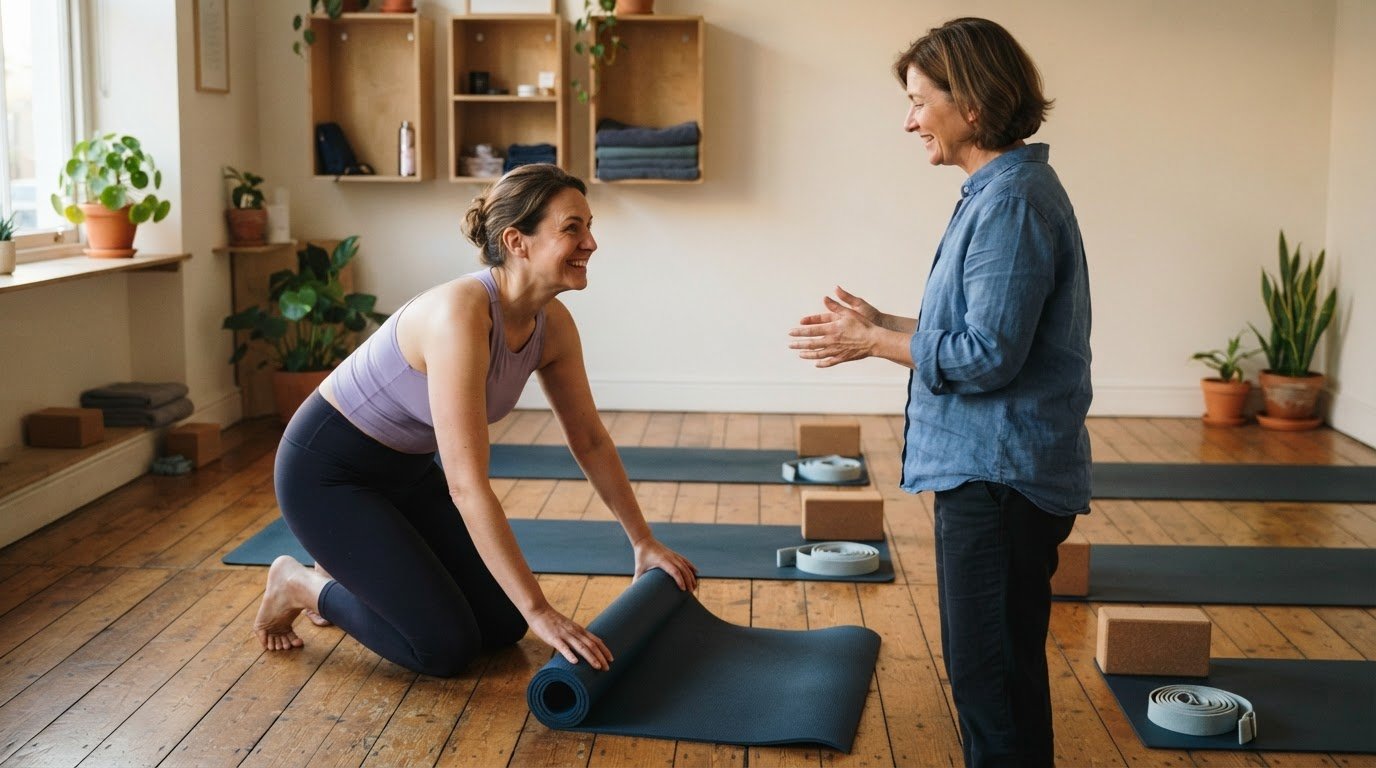
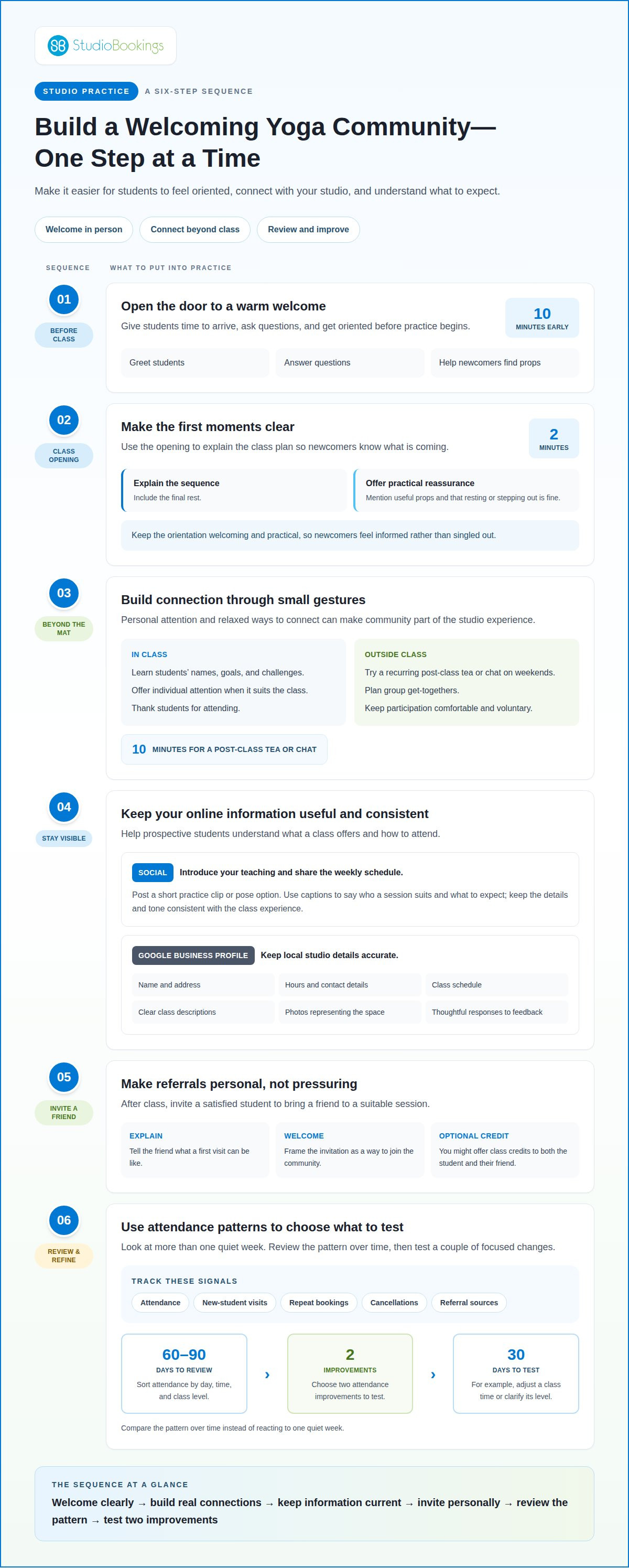
Start with the welcome. Open the studio 10 minutes before class so you can greet students, answer questions, and help newcomers find props. Use the first two minutes to explain the class plan, including its sequence and final rest. Tell new students which props they might use and that stepping out or resting is fine. These practical details help your audience feel oriented, not singled out.
Build relationships through small, consistent gestures. Learn students’ names, goals, and challenges, then offer individual attention when it suits the class. On weekends, try a recurring 10-minute post-class tea or chat. A relaxed conversation gives people a reason to connect beyond the mat. You can also plan group get-togethers and thank students for attending, making appreciation part of the community rather than an occasional gesture.
Social media can introduce your teaching and help people feel connected before they arrive. Share a short practice clip, explain a pose option, or post the weekly schedule with a clear invitation to join. Use captions to say who a session suits and what to expect. Keep the details and tone consistent with the experience students will find in class.
Keep your Google Business Profile accurate and useful for people searching nearby. Update your studio name, address, hours, contact information, and class schedule. Add clear class descriptions and photos that represent the space. Respond thoughtfully to student feedback. Consistent details help prospective students understand where you are and how to attend.
Make referrals personal and easy. After class, invite satisfied students to bring a friend to a suitable session, and explain what a first-timer can expect. You might offer class credits to both the referring student and their friend. Frame the invitation as a welcome into the community, not pressure to promote your business.
Track attendance, new-student visits, repeat bookings, cancellations, and referral sources. Review attendance from the past 60-90 days by day, time, and class level to see which sessions attract students. Then choose two attendance improvements to test over the next 30 days. For example, adjust a class time or clarify its level, and compare the pattern over time instead of reacting to one quiet week.
A sense of belonging can help students stay engaged with your studio. Group events and get-togethers create opportunities to connect beyond class, while recognizing students’ attendance shows that you appreciate their commitment. Keep participation comfortable and voluntary, so community feels like an invitation rather than an obligation.
For newcomers, the first few minutes can shape whether they feel they are in the right place. Make the first two minutes clear and welcoming, and tell new students where props are and which props they might want to use. That small orientation can help them feel more at ease as the class begins. To keep improving the experience, start by implementing two attendance improvements over the next 30 days, then use the results to decide what best supports the community.
Memorable classes bring your strengths together with what students need. A teacher who loves anatomy might explain how a pose works, while one who values reflection may weave in spiritual themes. Neither approach needs to suit everyone. Getting more students in your yoga class often starts with making your particular teaching style easy to recognize.
Find your niche by noticing which parts of teaching feel engaging and natural. Do you enjoy steady movement, restorative poses, precise alignment, or quiet reflection? Choose an emphasis you can deliver consistently, then describe it in simple terms. A restorative class, for example, should feel restorative in practice, not like a vigorous flow under a different name. When the description matches the experience, students know what to expect.
Your own journey can explain why you teach the way you do. Share a specific turning point, such as how yoga helped you slow down or understand movement differently. Keep the story relevant to the class, and explain how it informs your teaching today. Students need an honest sense of who will guide them and what matters in the room, not a polished speech.
Let your preferences inform your class format. One teacher changed a flow class to restorative after teaching in a warm studio triggered her headaches. The point is not to copy that change, but to notice when a format conflicts with your wellbeing or teaching strengths. Adapt your offering to something you can lead with care and consistency.
Use student feedback and attendance patterns to test your niche. Ask which class elements feel most useful, and look for recurring responses rather than changing direction after one comment. If students value detailed anatomy cues, make that emphasis clearer in the description. If they come for quiet and recovery, keep the pace and language aligned with that expectation. A recognizable, authentic niche gives the right students a clear reason to choose your sessions.
To clarify your voice, write continuously in a dedicated journal for 5 minutes, then repeat the exercise for a full month. Note the themes, phrases, and teaching moments you return to. Use those observations to shape class names, descriptions, and introductions. Keep learning from fellow teachers and students, pursue advanced training where it supports your goals, and maintain your personal practice. Your niche can evolve, but a consistent point of view gives students a reason to remember your class.
A first class is easier to book when students can picture what will happen. Explain whether it suits beginners, what level of effort to expect, and whether prior yoga experience is needed. If you call a class “all levels,” make sure a true beginner can follow it. The label is welcoming only when the teaching matches the promise.
Give new students practical options during class. Explain that resting is welcome, demonstrate a simpler pose variation, and offer a prop when it helps. Make options part of your regular instruction rather than singling out newcomers. For example, cue a supported lunge alongside the standard version so every student can choose what feels appropriate.
Make the first visit predictable. At the start, explain the class sequence and how it ends, including the final rest. When newcomers know what comes next, they can focus on practice instead of wondering whether they are keeping up. Use plain language for pose names and pause after unfamiliar instructions so students have time to follow along.
Consider an introductory offer that rewards attendance and gives students a clear reason to return. For example, a studio can provide a free class after a student attends 10 classes, using a paper or digital punch card. Explain how the card works when someone joins, then make progress easy to track. The offer encourages a habit without making a promise about results.
Schedules and formats can welcome more students when they reflect different needs and availability. Offer a mix of beginner-friendly and broadly accessible sessions, and consider times that work for people balancing work, family, and other commitments. Keep each class distinct in its pace, format, and description.
Use attendance patterns to guide small schedule changes. For instance, you could test moving an evening class from 7:30 PM to 7:00 PM, then observe how attendance responds. Avoid changing several factors at once. If you alter the time, keep the class format steady so you can see whether the new slot better suits students who are coming after work.
Make choosing and booking straightforward. Present the class level, format, time, and what to bring together rather than scattering details across messages. A concise description helps beginners decide whether a session suits them. Clear expectations, accessible options, and an easy-to-understand offer make a first visit a practical next step.
Students choose more confidently when a class description answers practical questions. In one or two sentences, explain the intensity and intended experience level, then name what students can expect, such as steady movement, quiet reflection, or focused alignment. “A gentle class with supported poses and a calm pace” gives a clearer picture than “find your balance.” Make sure the class delivers on its description.
Describe the value from the student’s point of view, not only through yoga terminology. Instead of listing “standing poses, twists, and forward folds,” explain that the sequence offers time to move steadily and pause between postures. A class for advanced students might emphasize challenging transitions and sustained poses. If you’re considering how to get more students in my yoga class, clear descriptions help potential students recognize whether your session fits what they want.
Give each class a clear audience without making the invitation restrictive. For example, say a lunchtime session suits people looking for a focused movement break, or an evening class offers a slower pace after a busy day. These details help prospective students picture how a class fits their schedule and give current students an easy way to describe it to a friend.
Partnerships can introduce your classes to people connected through local communities. A studio might team up with a neighborhood bookstore for a reflection-focused event or work with a community center to offer an accessible introductory session. Agree on the audience, format, and class description in advance. Explain the benefit to attendees, such as trying a beginner-friendly class, instead of relying on broad promotional language.
Use consistent wording wherever students see your schedule. Keep class names, descriptions, emails, and social posts aligned, so “slow flow” does not describe a vigorous session in one place and a gentle practice elsewhere. Note each class’s pace, focus, and intended experience, and use those details as a guide. Update the description whenever the format changes.
Before publishing a description, check it against the actual class. Does it name the pace? Does it tell students what kind of experience to expect? Does it distinguish the session from another offering, such as a restorative class or an advanced flow? Replacing vague phrases like “something for everyone” with one concrete detail can make the choice easier. For anyone asking how to get more students in my yoga class, precise class benefits give prospective students a practical reason to book.
Choose channels that help nearby students discover your classes, understand the experience, and take a clear next step. A manageable mix is often more useful than trying every platform. Start with a weekly email, helpful social media posts, and personal referrals. Give each channel a role: updates for current students, discovery for new audiences, and recommendations from people who know your studio.
Send a short weekly email with the current schedule and important updates. Make details easy to scan, including the time, format, and intended experience. You can also share a monthly theme or promotion, such as a focus on restorative practice. A steady email rhythm keeps your schedule visible without making students search through old messages.
Use social media to show what attending feels like, not just to announce open spots. Share a short demonstration of a pose option, a teacher explaining a class theme, or a behind-the-scenes look at preparing the studio. Include practical details: who the class suits, when it meets, and how to book. Useful, specific posts help people decide whether a session fits.
Referrals can turn a positive student experience into a personal invitation. A studio referral program can give both the current student and their friend $10 in class credits. Explain the offer in an email or a brief reminder after class, and make the next step obvious. Keep the invitation welcoming: students should feel they’re sharing a class they enjoy, not being asked to deliver a sales pitch.
Local partnerships can help you reach people beyond your current students. A yoga studio could collaborate with a neighborhood community center, bookstore, or wellness event to introduce a class to people with shared interests. Agree on the audience and session format before promoting it. Give attendees a concise description and clear booking details so interest can lead to a first visit.
Assess each channel by the actions it brings, not visibility alone. Note whether new students mention an email, social post, referral, or local event when they book. Compare those sources with attendance and repeat visits over time. If social posts get attention but few bookings, make the class information or booking process clearer. If referrals bring returning students, keep the invitation visible and straightforward.
Keep the workflow manageable as your schedule and student community grow. Streamline class scheduling and booking management so you can spend less time coordinating updates and more time teaching.
Give your monthly message one theme or promotion, then connect it to classes students can explore. This adds purpose to routine schedule updates without crowding every email with offers. On social media, balance class promotion with useful teaching, practice ideas, and inspiration. A brief explanation of a practice or a teacher’s perspective can show people what your studio is about. End each post with a clear invitation to learn more or book, so useful content and promotion work together.
StudioBookings helps yoga studios manage class schedules, memberships, payments, and staff from one cloud-based dashboard. Use its Yoga Studio Software when coordinating bookings and studio operations starts taking time away from teaching and supporting students.
Managing schedules and memberships together helps keep class information organized as you build community, welcome newcomers, and encourage repeat visits. StudioBookings supports your studio’s operations, leaving your teaching and relationships at the heart of student growth.
If you’d like to simplify the day-to-day management of your yoga studio, contact StudioBookings to discuss your needs.
Growth does not require a complete overhaul. Choose one change that reflects your teaching and the students you want to welcome, then pay attention to how people respond. Their questions, attendance, and feedback can guide your next improvement. This steady learning helps you attract more students while keeping the experience true to your values.
As your studio grows, make sure day-to-day administration supports the work happening in class. StudioBookings offers Yoga Studio Software, Pilates and Barre Studio Software, and Fitness and HIIT Studio Software to help studios manage key operations in one place. That leaves more room to focus on teaching and the relationships that help students feel at home.
Ready to explore a simpler way to manage your studio? Contact StudioBookings for support. Keep showing up for your students, and let each thoughtful step strengthen the community you’re creating.
Make the first step easy to understand and take. For example, host a “bring a friend” open house where newcomers can try a short sample practice before choosing a regular class. Follow up with a clear schedule and one suggested next session based on their interests. This gives prospective students a low-pressure way to experience your teaching and a direct path from curiosity to booking.
Offer a first-class pass or short starter package to help newcomers explore your teaching before choosing ongoing sessions. For example, pair an introductory class with a suggested follow-up in the same style, such as gentle movement or alignment. State exactly what the offer includes and how to use it. A clear package makes it easier for new students to decide without complicated discounts or unclear conditions.